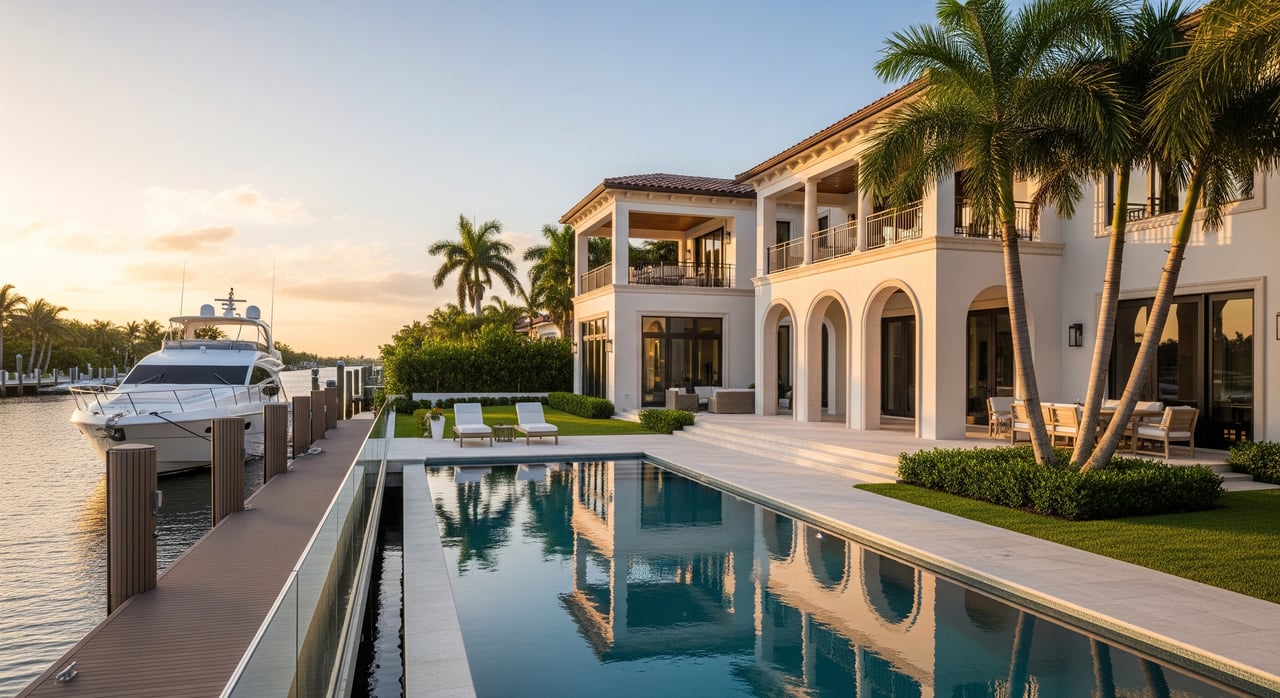
How Boca Raton Waterfront Living Really Works
February 5, 2026
February 5, 2026
Is “waterfront” the lifestyle you picture in Boca Raton, or just a great view that still leaves you driving to the marina? If you are upsizing or planning a seasonal move, the difference matters. In this guide, you will learn how access, permits, insurance, and maintenance really work so you can buy with confidence. Let’s dive in.
Homes on the Intracoastal Waterway offer direct access to open water. These properties often carry a premium and attract boaters who want fewer navigation hurdles. You will still need to confirm dock size, boat lift capacity, and local no-wake rules that shape daily use.
Canal neighborhoods vary in depth, width, and connectivity. Some canals are navigable to the Intracoastal, while others are shallow or dead ends. Always verify navigability at mean low water, bridge clearances, and any rules on boat length or motorized craft.
Many homes face lakes or retention ponds that deliver calming views and wildlife. These waters typically have no marine access for boating. Flood and drainage considerations still apply even when you do not plan to dock a boat.
Condo and townhome communities may offer assigned slips or access to a managed marina. Slip availability, waitlists, guest dock policies, and monthly fees vary by community. Owning a unit does not always guarantee a specific slip, so confirm the details in writing.
Proximity to the Boca Raton Inlet or major marinas can mean faster ocean runs and higher pricing. These locations may also see stronger wind and storm exposure. Plan for careful insurance and maintenance reviews in these zones.
Waterfront work is regulated at the city, county, state, and federal level. Expect permits and inspections for docks, seawalls, lifts, and shoreline changes. The City of Boca Raton details local requirements through its Permitting and Building Division.
State agencies regulate coastal construction, dredging, and impacts to wetlands and seagrass. You can review permitting guidance through the Florida Department of Environmental Protection. County programs also oversee environmental resources and shoreline protection; learn more at Palm Beach County Environmental Resources Management.
If you are purchasing in an HOA or condo, you will also need to follow association rules on dock design, lifts, and boat size. Florida Statutes for condos and HOAs set the framework for notice and approvals. You can reference the statutes at the Florida Legislature’s website.
Flood exposure varies by street and by elevation, not just by proximity to the water. Start with a Flood Zone determination and ask for an Elevation Certificate if available. The FEMA Flood Map Service Center shows official maps used by lenders and insurers.
Flood and wind coverage can be a significant part of your budget. National Flood Insurance Program policies are available in most areas, and private flood options exist in Florida. Market updates and regulatory guidance are posted by the Florida Office of Insurance Regulation.
Plan for windstorm deductibles and ask about wind mitigation features that may lower premiums. Request property-specific quotes early, because premiums vary with zone, elevation, and mitigation.
Salt and sun speed up wear on structures and systems. Routine inspections for docks, lifts, and electrical components are standard. Seawalls also have a lifespan and may need repair or replacement over time.
Expect higher maintenance for exterior hardware, doors, and appliances due to corrosion. Landscaping near the water often uses native, salt-tolerant plants and erosion control practices. Budget for HOA or marina fees if applicable, along with higher flood and wind insurance.
NOAA and state projections show ongoing sea-level rise and more frequent tidal flooding in South Florida. Review long-term planning and local resilience efforts. The NOAA Sea Level Rise Viewer provides helpful visual context for the region.
Living on the water can change your planning and daily routine. You may need extra time for boat prep, tides, and no-wake speed zones. Storm season plans usually include protection for docks and lifts and a strategy for your boat.
Inland homes reduce some maintenance and insurance variables but do not deliver boating from your backyard. Waterfront brings premium views and access with added due diligence. Many buyers find the tradeoffs worth it when the property aligns with their boating goals.
Use this quick list to focus your search and due diligence.
Pre-tour
Under contract
Before closing
A thoughtful strategy saves time and protects your budget. A local luxury advisor can frame your boat and lifestyle needs, pre-screen properties for access and rules, and coordinate the right inspections. You also gain introductions to experienced marine contractors, coastal engineers, title partners, and insurance specialists.
If you are comparing inland neighborhoods to waterfront enclaves, you deserve a clear, step-by-step plan. That is the service standard my clients expect and receive, with bilingual support for cross-border or seasonal moves. When you are ready, let’s map your options and create a confident path to the water.
Ready to explore Boca Raton waterfront living the right way? Connect with Alexandra Gonzalez to Request a Private Consultation.
Stay up to date on the latest real estate trends.




Etiam non quam lacus suspendisse faucibus interdum. Orci ac auctor augue mauris augue neque. Bibendum at varius vel pharetra. Viverra orci sagittis eu volutpat.