Architectural Styles That Define Palm Beach Luxury Homes
July 2, 2026
July 2, 2026
You can feel Palm Beach architecture before you know how to name it. A roofline, a shaded loggia, a crisp white facade, or a veranda facing the breeze can tell you just as much about a home as its square footage. If you are shopping for a luxury property in Palm Beach, understanding the styles that shape the market can help you narrow your search, ask better questions, and recognize lasting value. Let’s dive in.
In Palm Beach, architecture is part of the lifestyle and part of the property story. The Town of Palm Beach has a long preservation and design review framework intended to protect the town’s character, with a preservation ordinance dating to 1979 and more than 328 protected landmark properties, sites, and vistas.
That means style is not just about curb appeal. It can influence how a home lives, how it fits the climate, what kind of upkeep you should expect, and whether future exterior changes may be subject to review. For buyers, that makes architectural literacy a real advantage.
Palm Beach’s architectural identity was shaped early by Henry Flagler’s development of the area and later by Addison Mizner’s influential work in the 1920s. Mizner helped define the romantic, indoor-outdoor look many people still associate with Palm Beach today.
His projects used features like tiled roof towers, turrets, sheltered cloisters, and flowing layouts that opened to patios and terraces. Over time, other notable architects expanded the local design vocabulary into British Colonial, Colonial Revival, Neo-Classical, Monterey, and modern forms.
An important detail for buyers is that Palm Beach homes are not always strictly one style. Town design guidance notes that mixed styles are common, and when done thoughtfully, they can become some of the most memorable properties in the market.
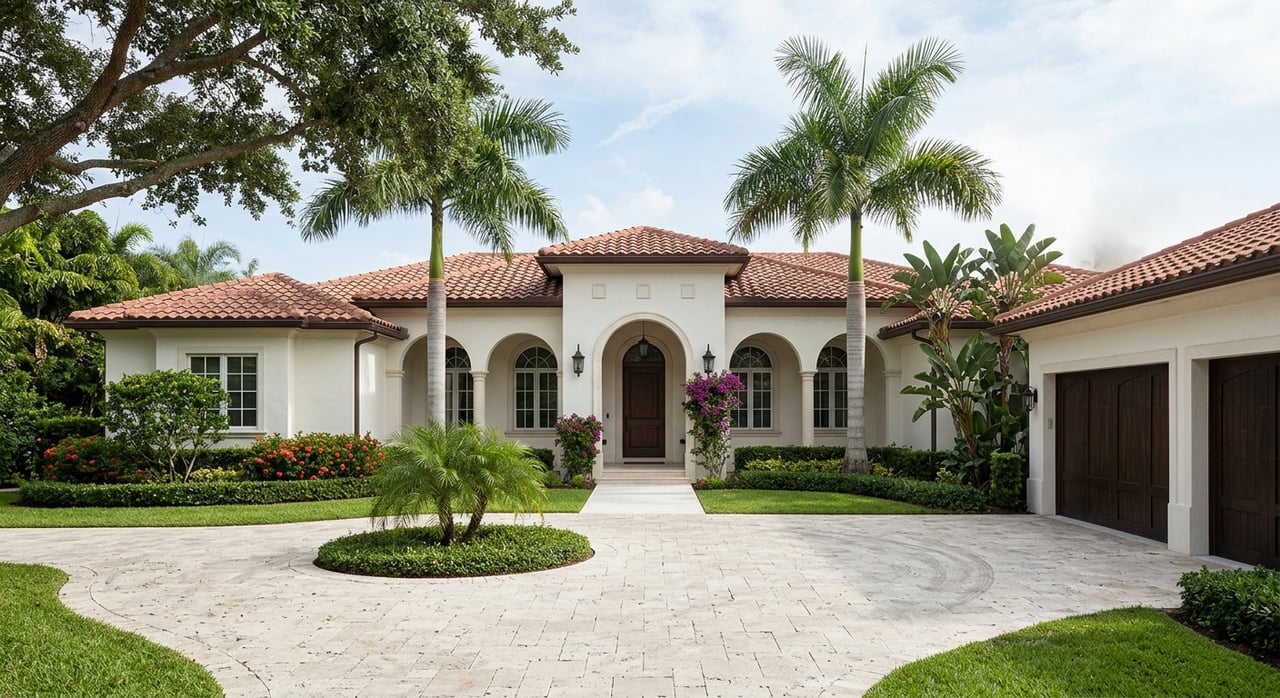
Mediterranean Revival is widely recognized by the Town of Palm Beach as the most popular architecture in Palm Beach. If you picture a classic Palm Beach estate, there is a good chance you are imagining some version of this style.
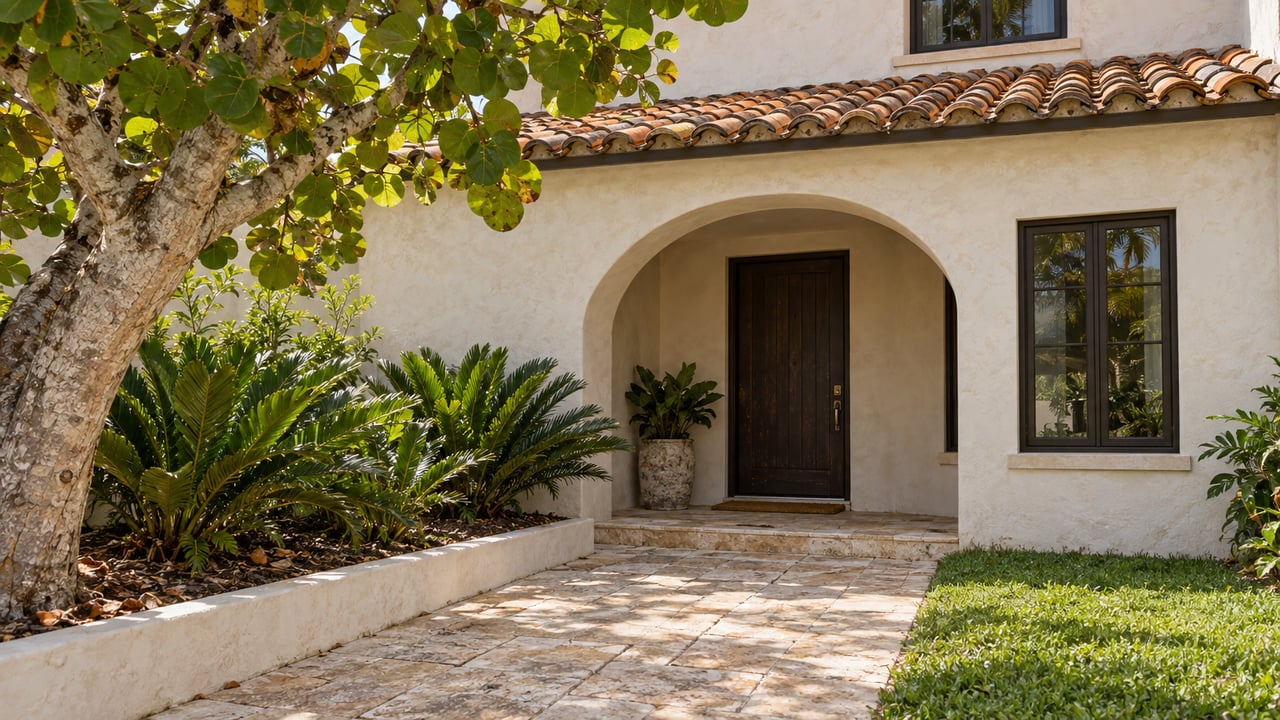
This style often includes textured stucco, low-pitched roofs, reddish barrel clay tile, arches, wrought iron, decorative chimneys, towers, courtyards, patios, terraces, and loggias. In Palm Beach, many homes blend several Mediterranean influences rather than follow one pure historic model.
The result is warm, layered, and expressive. These homes often feel designed for arrival, with entry courtyards, arched openings, and outdoor rooms that create a strong sense of privacy and drama.
Mediterranean Revival works beautifully with South Florida living. The architecture naturally supports indoor-outdoor flow through cloisters, arcades, patios, and garden-facing living spaces.
If you want a home that feels elegant, timeless, and ideal for entertaining, this style often checks those boxes. It also carries a strong Palm Beach identity, which can matter if you are drawn to the island’s classic look.
This is a detail-rich style, and detail usually means upkeep. Stucco, tile roofs, ironwork, fountains, and carved elements all need regular care, especially in a coastal environment.
The town’s landmark manual notes that coastal salt can deteriorate stucco and concrete facades over time. If you are touring a Mediterranean Revival home, ask about roof inspections, drainage, stucco condition, and the maintenance history of decorative features.
British Colonial, sometimes described locally as influenced by Bermuda and India, brings a more restrained and airy expression to Palm Beach luxury. It is still formal enough for estate living, but the mood is often lighter and quieter than Mediterranean Revival.
In Palm Beach, this style is associated with steeply pitched roofs, concrete tile, prominent chimneys, arched openings, shutters, and sometimes a scalloped gable parapet at the entry. Long verandas, small porches, and upper balconies are also key visual cues.
This is a style that often feels composed and climate-aware. Shaded outdoor spaces and breezy transitions between inside and outside are central to its appeal.
If you like classic architecture but prefer less ornament, British Colonial can be a strong fit. It offers structure, symmetry, and a veranda-centered lifestyle without the heavier detailing often seen in more romantic revival styles.
It can feel especially appealing if you want a luxury home that is polished yet relaxed. In Palm Beach, that balance can be hard to find and very desirable.
With this style, upkeep often centers on shutters, wood trim, roof edges, and chimney details. On salt-exposed properties, these exterior elements deserve close attention.
When you tour a home in this style, look beyond the charm. Ask how exterior materials have been maintained and whether items like shutters and trim have been repaired or replaced over time.
For buyers who prefer a more formal, classically composed home, Georgian Revival and related classical styles are an important part of the Palm Beach market. These homes often project order, balance, and a more traditionally European character.
The local landmark manual describes Georgian Revival with features such as symmetry, pedimented projecting pavilions, columns or pilasters, and Palladian or Venetian windows. The town’s comprehensive plan notes that local versions may also include emphasized entries, projecting metal porch roofs, large stairs, and quoins.
Some homes in this broader family may also lean Neo-Classical. For a buyer, the key takeaway is the overall feeling: formal entries, balanced facades, and crisp architectural lines.
These homes often appeal to buyers who want a property with a stately, enduring look. If your taste runs more traditional than resort-like, Georgian Revival may feel especially compelling.
It also tends to present beautifully from the street. The symmetry and structure can create a strong sense of presence, which matters in a market where architecture is part of long-term value perception.
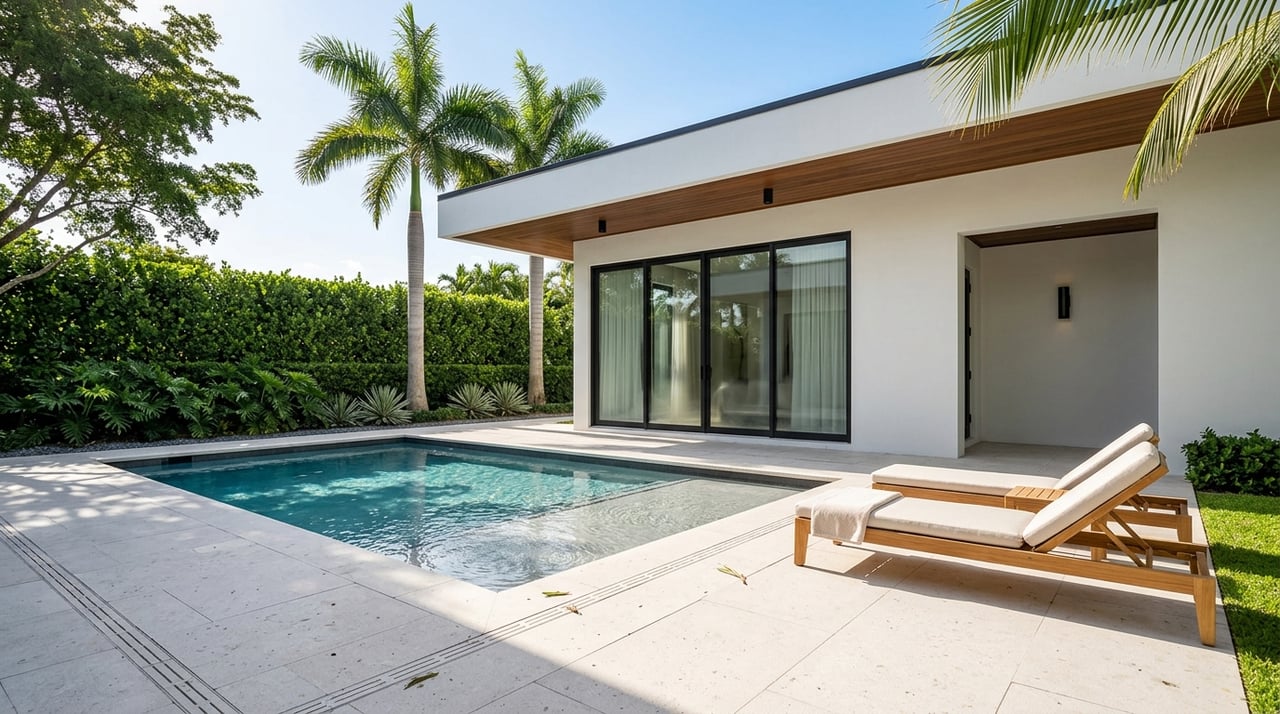
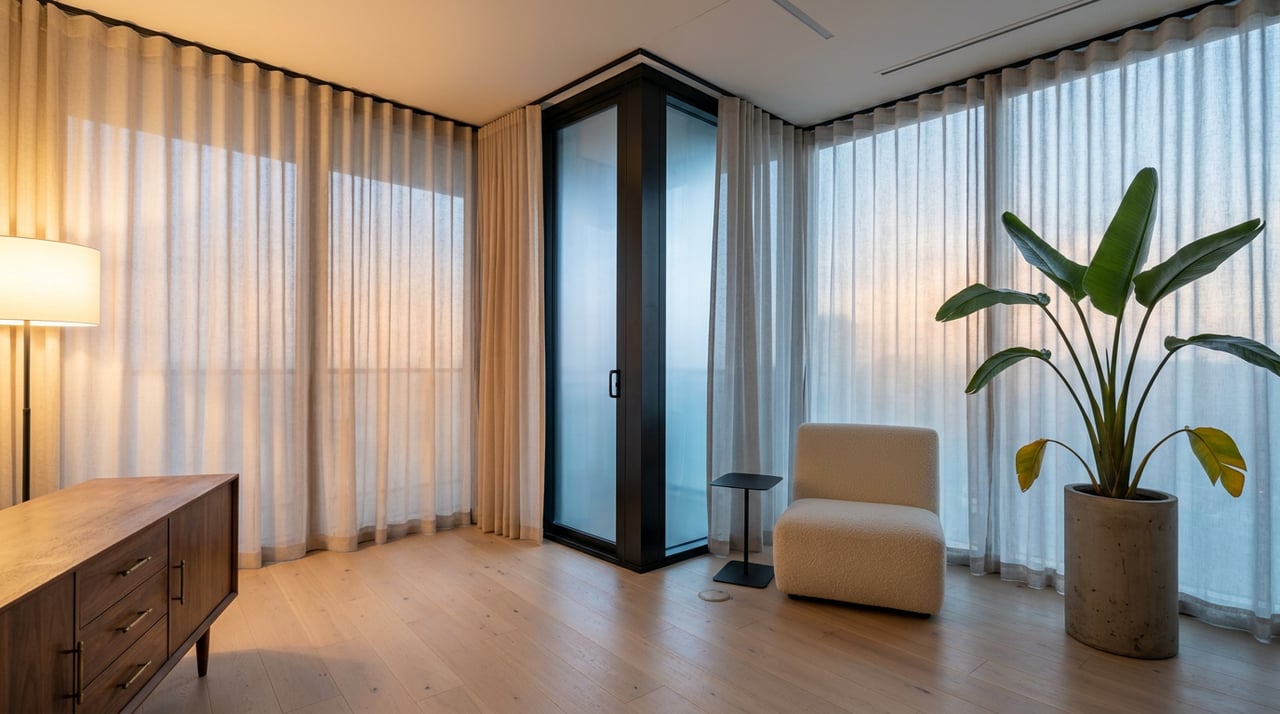
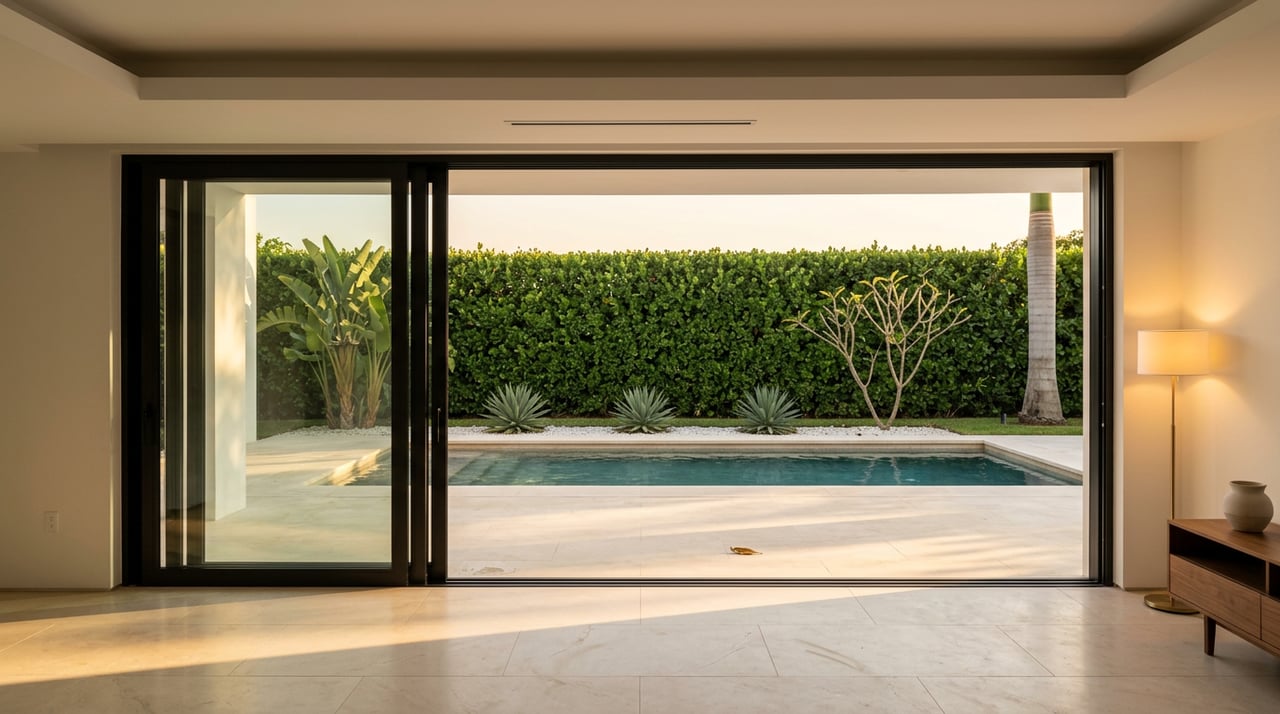
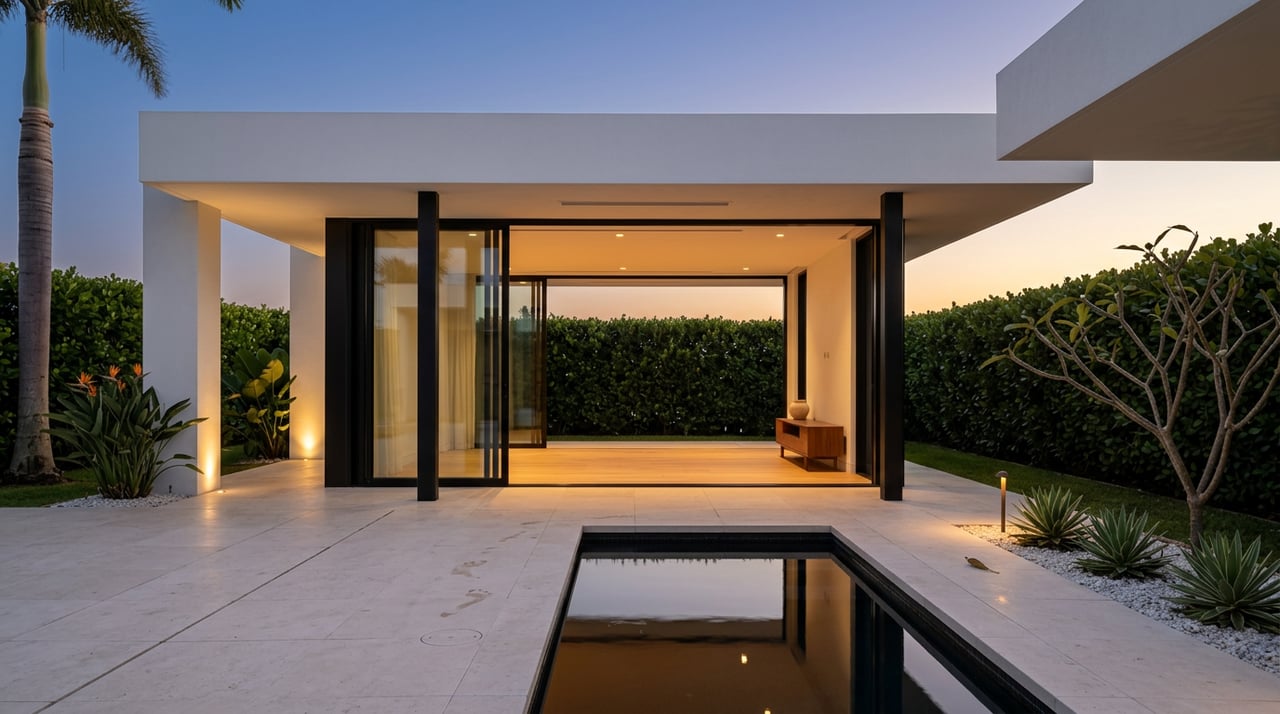
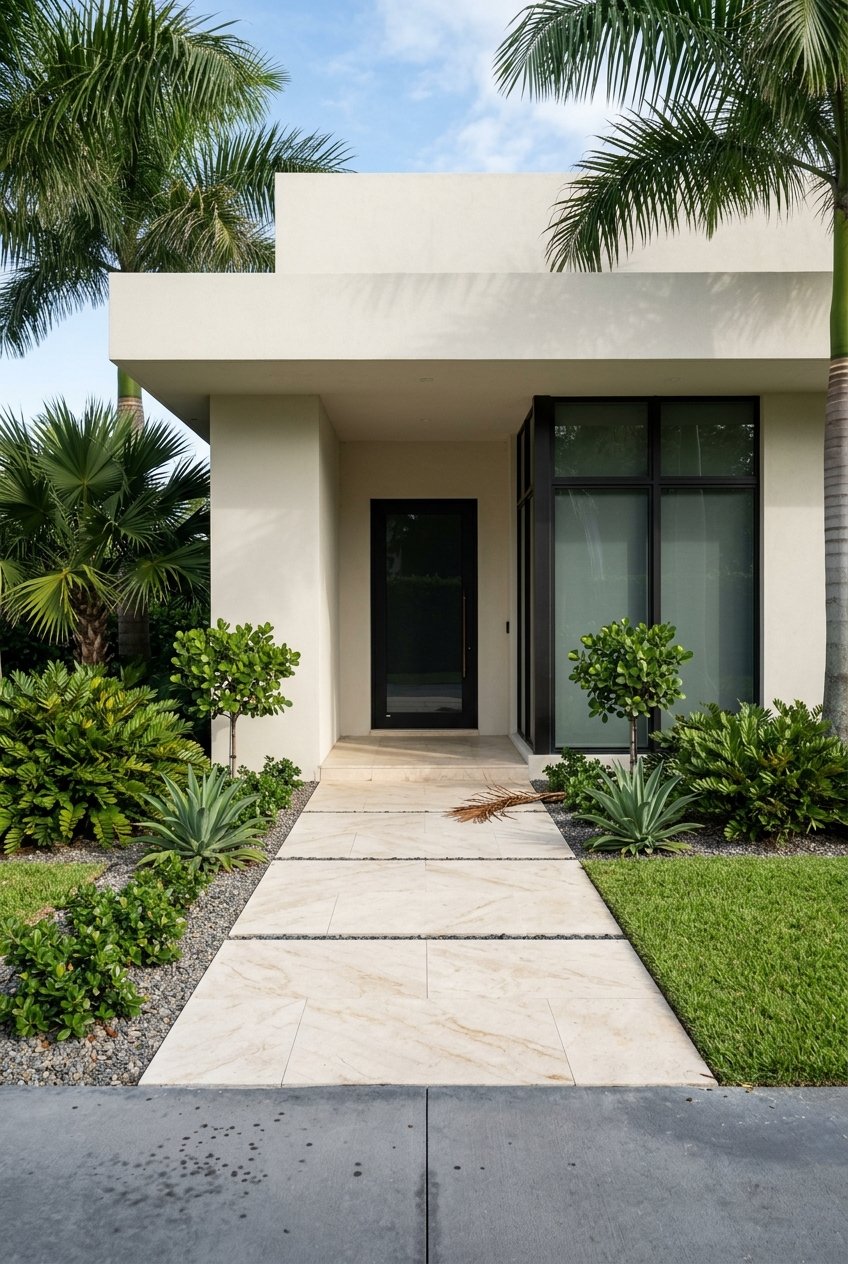
Palm Beach is not only about revival architecture. The town also recognizes contemporary and mid-century modern styles, and the local landmark manual identifies late twentieth-century homes with expansive glass, flat roofs, sleek profiles, stark white facades, and rectilinear forms.
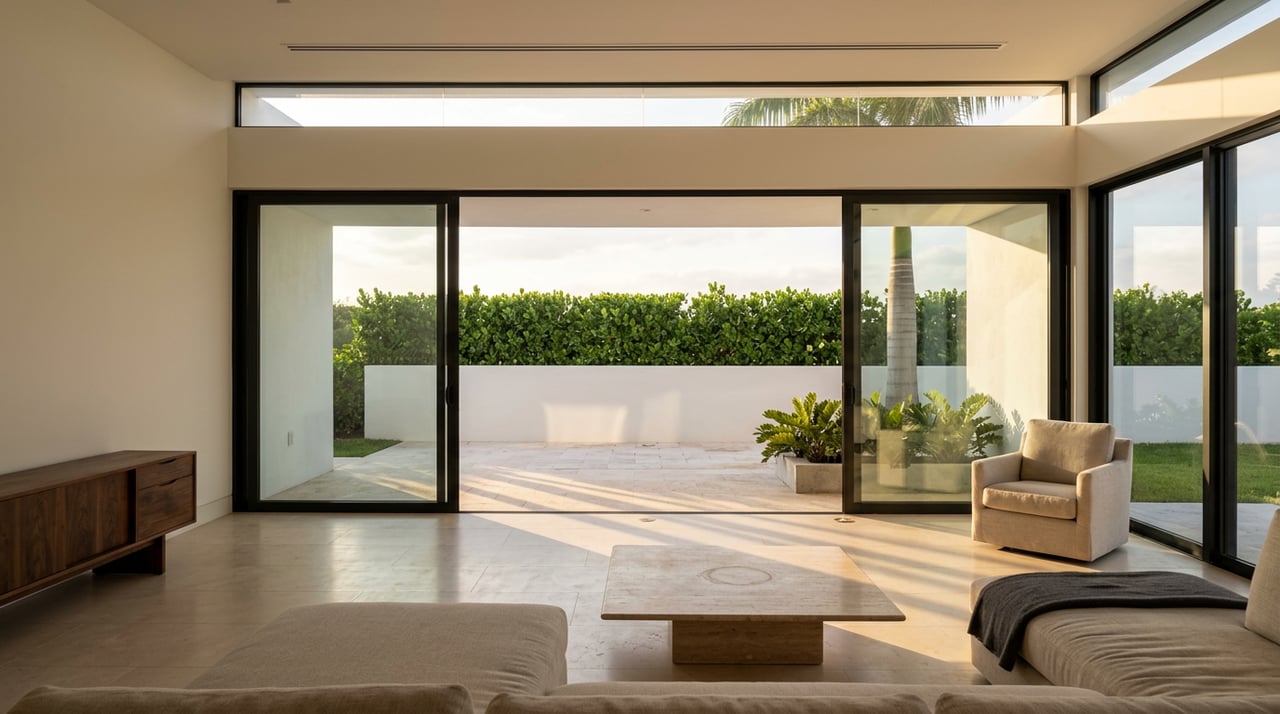
You may see larger glass walls, low or flat rooflines, minimal ornament, and strong indoor-outdoor sightlines. Related references in Palm Beach style categories include International and Ranch houses with low profiles and large windows.
While people often say “modern coastal,” that is more of a local shorthand than a formal preservation label. In practical terms, it describes homes that feel lighter, cleaner, and more open to the landscape.
Modern homes can feel especially appealing if you want bright interiors, strong pool and garden connections, and a simpler visual language. These properties often prioritize openness and natural light over ornament.
For some buyers, that makes daily living feel easier and more relaxed. For others, it creates a striking contrast to Palm Beach’s more historic architectural traditions.
Modern homes come with their own maintenance priorities. Larger glass areas, flat or low-slope roofs, and clean exterior detailing can mean more attention to drainage, sealants, and sun exposure.
If you are comparing a modern property to a revival-style estate, remember that “simpler-looking” does not always mean lower maintenance. It often just means a different maintenance checklist.
Not every luxury home in Palm Beach fits neatly into the most recognized categories. During your search, you may also hear a few other style terms.
Mission Revival homes may include bell towers, wide projecting eaves, clay-tiled roofs, arches, stucco, and porches. They share some visual language with Mediterranean styles but have their own distinct profile.
Monterey architecture is often identified by a second-story balcony under the principal roof, sometimes with wood or iron railings. It is a helpful term to know when reviewing older homes or architecturally layered estates.
These styles bring smoother stucco, geometric or streamlined forms, and a more modernist residential expression. In Palm Beach, they can offer a very different visual personality from the island’s revival traditions.
In Palm Beach, the outdoor areas are often as intentional as the interior rooms. That is especially true in luxury properties, where the line between house and garden is carefully designed.
Mediterranean Revival emphasizes courtyards, terraces, patios, loggias, arcades, and fountains. British Colonial centers more on verandas, porches, balconies, and shaded openings, while modern homes often use larger glass and cleaner transitions to pools and gardens.
For you as a buyer, this matters because outdoor space is usually not an afterthought. It is part of how the home functions, how it entertains, and how it responds to the Palm Beach climate.
A beautiful home here also means planning for coastal conditions. UF/IFAS notes that wind, salt, sandy soils, humidity, mildew, rust, and corrosion all shape how homes and landscapes perform over time.
The Town of Palm Beach’s landmark manual recommends annual roof and drainage inspections, gutter cleaning, careful attention to barrel-tile grooves, and repair methods that match original materials and appearance. It also notes that ordinary maintenance that does not change outward appearance is generally not subject to review, while exterior changes to landmarked properties are reviewed by the Landmarks Preservation Commission.
If you expect to use the home seasonally, maintenance planning becomes even more important. Unoccupied homes can be more vulnerable to mildew, storm damage, pests, and corrosion, so buyers should ask how the property is managed when vacant.
Architecture is easier to appreciate when you know what to ask. A thoughtful first tour can reveal not just what a home looks like, but how it will live and what it will require.
Consider asking:
These questions can help you compare homes that may look equally attractive at first glance but carry very different ownership considerations.
If you are still figuring out what fits you best, start by noticing which features you respond to most. You may love arches, courtyards, and barrel tile, or you may prefer verandas, shutters, symmetry, or expansive glass.
A few Palm Beach terms can also help you describe your taste more clearly during your search: loggia, arcade, colonnade, courtyard, terrace, veranda, and shuttered openings. Knowing this vocabulary can make home tours more productive and help you communicate exactly what you want.
The best luxury purchase is not always the most famous style. It is the home whose design, maintenance profile, and daily feel match the way you want to live in Palm Beach.
If you want help narrowing the options and touring Palm Beach homes with a sharper eye for architecture, maintenance, and long-term fit, Alexandra Gonzalez offers concierge-level guidance tailored to your goals.
Stay up to date on the latest real estate trends.
Etiam non quam lacus suspendisse faucibus interdum. Orci ac auctor augue mauris augue neque. Bibendum at varius vel pharetra. Viverra orci sagittis eu volutpat.